Nov 27, 2010

Perkins', Rabbits and My 8th Grade Class

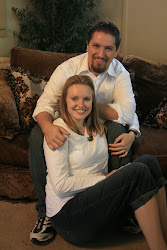
What do the Perkins', Rabbits and my 8th grade math class have in common?  See below the picture to find out.

They all multiply really fast.  Faster than you might expect.   Of course, rabbits just breed like... well, rabbits.  My 8th graders are supa' stah's when it comes to mental math (they really don't even need calculators).  And the Perkins' multiply.  You see,

We're pregnant!  Or, more accurately, Alison is pregnant.  We found out a couple weeks ago, and have made the big announcement over the Thanksgiving holiday.  So some of the details:

  • Alison is about 11 weeks along.  We'll go in this next week for the next checkup.  I'll post the ultra sound then. 
  • Alison's due in June, which means we'll be hanging out in Bahrain for the summer.  We have heard rumors that, once many expats vacate after school lets out, things are pretty dead here.  It'll be nice to have a quiet summer. 
  • Last pregnancy, I gained some sympathy weight.  I think it would be unrealistic to keep from sympathizing at ALL this time around, but a little less sympathy might be in order. 
  • Eva is also very excited.  She'll be giving up her crib for the big girl bed come July when its time for baby II to move into the bedroom.  
  • Eva's room is no longer 1/2 baby room and 1/2 office.  It is now completely children's room.
Here's some more info about the pregnancy this particular week: 
  • Your baby, just over 1 1/2 inches long and about the size of a fig, is now almost fully formed
  • The hands will soon open and close into fists
  • Tiny tooth buds are beginning to appear under her gum
  • Some of her bones are beginning to harden
  • She's/he's already busy kicking and stretching, and the tiny movements are so effortless they look like water ballet. These movements will become more frequent as his/her body grows and becomes more developed and functional. 

Nov 26, 2010

Happy Thanksgiving!

The Thanksgiving holiday has provided me with some of my fondest memories with family.  Every year we would go down to my Aunt and Uncles, and my whole mom's side of the family would cram into their house.  All but one of the cousins were (are) boys, so we always had a good time wrestling, playing soccer or basketball and making movies.  So large Thanksgivings are always a lot of fun.

We hosted Thanksgiving with our neighbor, Linda, for the third time.  We don't have enough room for all those people in our apartment, but between the two flats, no one goes without a place to sit.  Alison did more preparation than previous years, and so has been spending the last couple of days baking and cooking.  Today was a doosey of a baking/cooking day, but here is some of what she put together.

Do you see the large red pot on the stove?  That was FILLED with potatoes, and thus filled with REAL mashed potatoes.... mmmm.....


Here is a closeup of the green bean caserolle that Alison made.  Cream, cheese, butter, more cheese... it doesn't get any more heart-stoppingly better than that.


I had meant to take a picture of all the people who'd come, but I forgot in all the hubub.  It was a great time of hanging out with some of our American friends, and a lot of our non-American friends came a long to celebrate the holiday.

Before we ate, Alison read the following Psalm as our prayer of thanksgiving to God for all he has provided:

Psalm 136: 1-9
1Give thanks to the LORD, for he is good. 
            His love endures forever. 
2Give thanks to the God of gods. 
            His love endures forever. 
3Give thanks to the Lord of lords: 
            His love endures forever.
4to him who alone does great wonders,
            His love endures forever.
5who by his understanding made the heavens,
            His love endures forever.
6who spread out the earth upon the waters,
            His love endures forever.
7who made the great lights—
            His love endures forever.
8the sun to govern the day,
            His love endures forever.
9the moon and stars to govern the night;
            His love endures forever.

Nov 24, 2010

What I LOVE about Arab Culture

(Alison has written a guest post! In fact, she may become a regular author. Keep your eyes peeled!)

On Sunday, two days before the official Eid holidays, we decided to do some errands during the day (Since Josh is a teacher, he gets this whole week off. Normally he would work Sun – Thurs). However, since it's still a business day, governmental government offices are open and we decided to try to get some tasks done that normally get put, such as getting our car registered and insurance paid, and getting mine and Eva’s visa worked out.

Both the visa place and the insurance place are next to each other, so Josh dropped Eva and I off to get our residence permits worked out, while he took care of the car. I enter the LMRA (Labor Market Regulatory Authority) which is always filled with tons of people – mostly laborers. The place where I have to take a number just to wait is already a line 10 deep. Often when I go to these government establishments, there is usually a line for women only. But I’m never quite sure where it is (I think women actually just walk right to the front) so I tend to hold back and hope that I get called forward. And I do – almost every time. (At the Dubai Airport I have NEVER waited in an immigration line more than 5 minutes with Eva – no matter how busy - before an Emirati official comes and ushers me to the front).

And sure enough, the guy working the counter asks several men to move out of the way so that I could come forward and then he smiles and coos at Eva and pleasantly hands me my number. I make my way up to the waiting area, where I expect around a 30-40 minute wait (there were probably 40 people or so waiting in the same room. As I find a chair, I notice my number has already been called. I go to the desk and Eva & I get our visa’s sorted quickly and then we leave. All the while having kind Arab men volunteer to help me get my stroller up and down the stairs of the building.

I love the fact that Arabs rarely let women wait in line. And if you are a women with a baby – it’s almost as if they are apologetic that they didn’t get the thing you came to do done before you got there. It’s fantastic. And this is not just true about older grandfatherly Arab men who are preferential to women and babies. Single guys in their twenties will coo over Eva and ask to hold her. It was a little bit of a shock to me at first – as that kind of behavior isn’t exactly the norm in the US.

Nov 17, 2010

Eid Al Adha Part 4: Stoning and Sacrifice

You can read Part 1 here, Part 2 here, and Part 3 here.

This is the second day of the Hajj.  To recap, the day before Hajj is the ritual cleansing.  The first day of Hajj itself is the praying for forgiveness.  Today is the second day of Hajj – the stoning and sacrifice.

1.  What People are Doing on Hajj:  The night before, those on Hajj spent the night at a place called Muzdalifa where some slept and some stayed awake all night.  When they wake up, they will head to Mina where there are three pillars.  Before I talk about the rituals, it would be good to describe the Quranic version of events. 
Christians will recall that Abraham had been promised a son.  Impatient that God had not provided a son through Sarah, Abraham takes a concubine to bear him a son – Ishmael.  Later on, God asks Abraham to show his devotion to God by sacrificing his son.  Muslims believe that the son to be sacrificed was Ishmael. 

While on his way to perform the sacrifice, Satan appears three times tempting Abraham to ignore God’s instructions concerning the sacrifice of Ishmael.  Muslims believe that Abraham threw stones at Satan.  As Abraham was about to sacrifice Ishmael, God provided a ram to be sacrificed instead, satisfied that Abraham was totally committed to Him.

Now back to those on Hajj.  They have arrived at Mina where there are three large pillars.  They will throw stones (collected as they walk from one location to the next) at the three pillars, which represent Satan, and the three times he tempted Abraham.  While stoning the pillars, people renounce evil and declare their willingness to sacrifice all they have to God. Once they have finished the stoning, they will kill a sheep or a goat in memorial of God’s provision for a substitute for Ishmael. 

2.   What people are doing in Bahrain:  again, I’m not sure.  I’ve not done enough research for this.  Many, though, are probably killing a sheep, goal or a camel (or some other animal) as a way to remember God providing a sheep in place of Abraham’s son.

3.  Beliefs: 
  • Satan tries to thwart one’s obedience to God.
  • Evil must be resisted and one must be willing to sacrifice all they have to God
  • Remembering God’s faithfulness in the past
4.  Similarities and Differences
  • Difference: The Story of Abraham’s Sacrifice – there is a lot to be said about the differences between the stories in the Quran and the Bible.  I’ll highlight two things.  First, the Bible does not mention Satan tempting Abraham (though I imagine there were a lot of serious misgivings as Abraham approached the sacrifice).  Second, the Bible identifies Isaac as the son to be sacrificed, as opposed to Ishmael.
  • Similarity:  Like Muslims, followers of Jesus acknowledge that there is a spiritual battle.  Satan tries to tempt followers of Jesus and thwart God’s plans – the plan which is ultimately to poor out His love on His people. Romans 8:35-39 might be an appropriate verse to put here:
    35Who shall separate us from the love of Christ? Shall trouble or hardship or persecution or famine or nakedness or danger or sword? 36 As it is written:
                                “For your sake we face death all day long;
                                 we are considered as sheep to be slaughtered.”
37 No, in all these things we are more than conquerors through him who loved us. 38 For I am convinced that neither death nor life, neither angels nor demons, neither the present nor the future, nor any powers, 39 neither height nor depth, nor anything else in all creation, will be able to separate us from the love of God that is in Christ Jesus our Lord.
  • Similarity:  We must resist evil.  Followers of Jesus understand that God has prepared us as vessels of righteousness.  We also understand that everything that we have is a gift from God.  And as such, we are to use all things we have for the Glory of God.
  • Similarity:  Like Muslims, we also remember God’s faithfulness in the past, albeit in different ways.  We have Christmas – the remembering of the birth of Jesus.  We also have Easter (which in some ways is the equivalent of Eid Al Adha), which remembers Jesus as the sacrifice for our sins. 

Eid Al Adha Part 3: Wuqoof – Standing at Arafat

You can read Part 1 here and Part 2 here.

Yesterday was a busy day for us, and I didn’t get a chance to write.  My apologies to all three of my readers.  Today I will be more on top of it.

1.  What People are Doing on Hajj | Wuqoof
This is the first day of the Hajj itself, and may be the most important day of Hajj (my Muslim friends can correct me if I’m wrong).   Today is the day when Muslims gather on the Plain of Arafat and face Mecca.  Many will fast, as fasting atones for the guilt of the previous year and the following year.  From Noon till sundown, they pray on the following topics:
  • They should remember God
  • They should ask for forgiveness
  • They should pray other Islamic prayers
An especially sacred moment is during the setting of the sun.  During this time, people are alone with God.  It is during this time that they are requesting that sins and lifelong shortcomings be forgiven.  At sunset, a cannon signals the end of the ritual and pilgrims head to Muzdalifa.  At this location many will sleep and some will stay up all night. 

2.  What people are doing in Bahrain:  I’ve not been able to find out a whole lot.  The people I was going to ask have not been around.  However, the roads were fairly quiet yesterday.  I didn’t see a whole lot of Bahraini’s out.  When we were out, it was mostly expatriates on the roads and in the grocery store.  I imagine that some people are fasting (even though they are not on Hajj) and many people are visiting family.

3.  Beliefs behind the rituals: 
  • People are seeking to be forgiven for their sins.  It is important to note that the emphasis is on the shame of sins.  Our sins are shameful before God’s eyes.  Our sins separate us from God and we must be forgiven for those sins.
  • People are seeking intimacy and closeness with God.  This goes hand in hand with the first.  In order to have intimacy and closeness with God, the shame of our sins must be removed from us, for God is a Holy God.
  • God is a Holy God, and he cannot tolerate our sinfulness and the shame we bring on ourselves through our sin separates us from God.
4.  Similarities and Differences to Christianity
  • Similarity:  As a follower of Jesus, I must seek forgiveness for my sins.  In fact, I am invited to do it in 1 John 1:8-9: If we say we have no sin, we deceive ourselves, and the truth is not in us. 9If we confess our sins, he is faithful and just to forgive us our sins and to cleanse us from all unrighteousness.
  • Difference:  My sin is only forgiven because Jesus – the Son of God – has taken the punishment.  My sin has brought shame on me that separates me from God, and since God is a Holy and Righteous God, He must deal with my shame.  In His mercy, God placed the punishment on Jesus instead of me, giving me freedom from the shame I have brought upon myself.
  • Similarity:  followers of Jesus seek intimacy with God.  In fact, people of many religions seek intimacy with God.  But, since God is Holy and cannot tolerate the shame of man’s sin, we cannot experience intimacy with Him outside of the forgiveness of sin.  Why seek intimacy with God?  Because God is all satisfying.  
  • Similarity:  God is a Holy God.  God is Righteousness.  God is Mercy.  God is Forgiving.  God is Love.